A clean workplace helps employees feel comfortable, makes a good impression on customers, and keeps daily business activities running smoothly. But when you hire a cleaning company, how do you know what is actually included in the service?
Not every cleaning company offers the same tasks. Some focus on basic office upkeep, while others provide detailed floor care, restroom cleaning, and other janitorial work. Knowing what to expect helps you choose the right provider, compare quotes, and avoid surprise costs.
In this guide, we will explain the common areas that professional cleaners may handle, which extra services you might need, and what to ask before signing a cleaning agreement.
What Are Commercial Cleaning Services?
Commercial cleaning services help keep business spaces clean, organized, and presentable. These services may cover offices, retail stores, shared workspaces, and other commercial buildings.
The exact tasks depend on the size of your property, the type of business you operate, and how often the space needs cleaning.
For example, a small office may need vacuuming, dusting, and restroom cleaning several times a week. A busy commercial building may require daily attention to floors, entrances, break rooms, and shared areas.
Before hiring a provider, ask for a written list of the tasks included in your plan. This makes it easier to understand what you are paying for and which responsibilities may require a separate service.
1. Office and Common Area Cleaning
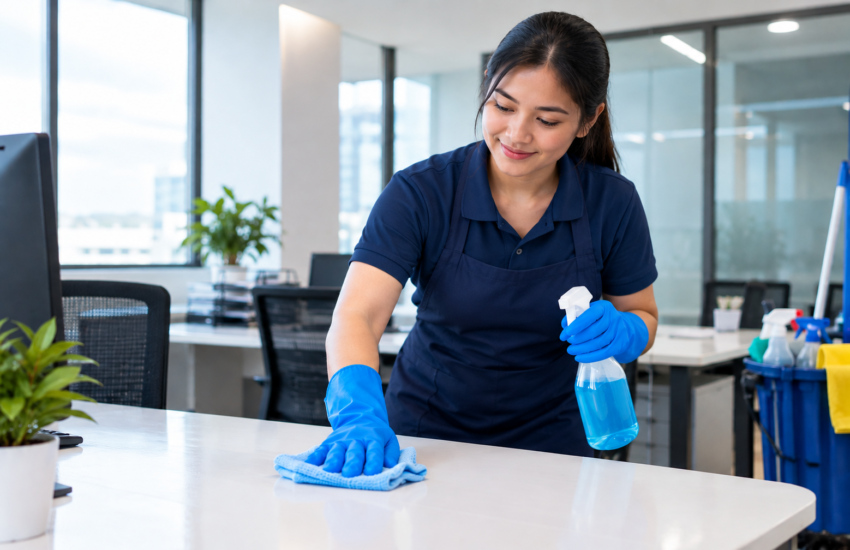
Offices and shared spaces often collect dust, fingerprints, crumbs, and everyday dirt. Regular cleaning helps these areas stay neat and ready for employees and visitors.
Common tasks may include:
- Dusting desks, shelves, tables, and other accessible surfaces
- Wiping shared tables and counters
- Cleaning reception areas and waiting rooms
- Emptying wastebaskets and replacing liners when included
- Vacuuming carpets and rugs
- Sweeping and mopping hard floors
- Cleaning fingerprints from glass doors and other accessible surfaces
- Straightening shared areas without moving personal belongings
Reception areas deserve special attention because they are often the first spaces customers see. Meeting rooms also benefit from regular care because employees and visitors use them throughout the day.
Ask whether cleaners will work around desk equipment or clean only accessible surfaces. This helps set clear expectations and protects personal items.
2. Restroom Cleaning and Sanitizing
Restrooms need regular cleaning because many people use them throughout the workday. A dirty restroom can create an unpleasant experience for employees, customers, and visitors.
Depending on the agreement, restroom cleaning may include:
- Cleaning toilets, sinks, and faucets
- Wiping counters and mirrors
- Cleaning and disinfecting frequently touched surfaces
- Mopping restroom floors
- Emptying trash bins
- Removing visible marks from doors and partitions
- Refilling toilet paper, soap, and paper towels when supplies are provided or included
It is important to distinguish between cleaning and disinfecting. Cleaning removes dirt and grime, while disinfecting uses an appropriate product according to its label to reduce germs on surfaces.
Ask which surfaces are disinfected, which products are used, and whether restocking supplies is part of the service. Do not assume that purchasing a cleaning package automatically includes every restroom task.
3. Floor Cleaning and Maintenance
Floors receive constant foot traffic and can quickly collect dust, dirt, food particles, and moisture. The right cleaning method depends on the flooring material and the amount of daily use.
A standard cleaning plan may include:
- Sweeping and mopping hard floors
- Vacuuming carpets and rugs
- Removing visible dirt near entrances
- Spot-cleaning small marks when possible
- Cleaning around accessible furniture
- Paying attention to corners and edges
Some businesses may also need carpet extraction, floor polishing, machine scrubbing, or other specialized treatments. These tasks often require different equipment and may cost extra.
When reviewing a quote, ask whether floor care covers routine cleaning only or includes deeper treatments. Also confirm how often carpets and other high-traffic areas will receive additional attention.
4. Break Room and Kitchen Cleaning
Break rooms and kitchen areas can become messy quickly. Food spills, coffee stains, crumbs, and grease can build up when these spaces are not maintained.
Typical tasks may include:
- Wiping counters and tables
- Cleaning accessible cabinet fronts
- Wiping the outside of appliances
- Cleaning sinks and faucets
- Sweeping and mopping floors
- Emptying trash bins
- Wiping high-touch surfaces
However, cleaning the inside of refrigerators, microwaves, ovens, and cabinets may not be included in a routine plan. Washing dishes, removing old food, and cleaning personal items may also fall outside the agreement.
If employees share a kitchen, decide who handles dishes, food storage, and personal belongings. Clear responsibilities help prevent misunderstandings between staff and the cleaning team.
5. Trash Removal and Touchpoint Cleaning
Waste removal is a common part of workplace upkeep, but the details should be confirmed before service begins.
A cleaning checklist may cover emptying office wastebaskets, collecting trash from shared spaces, and moving bagged waste to a designated collection point.
Ask whether cleaners replace bin liners and whether recycling is separated. Large waste items, confidential documents, and hazardous materials usually require separate instructions or specialized handling.
High-touch surfaces also deserve attention. These may include door handles, light switches, handrails, shared counters, and other frequently used points of contact.
The cleaning plan should explain which surfaces receive routine attention and which receive disinfecting treatment. This creates a more consistent process without assuming that every surface is treated in the same way.
6. Window and Glass Cleaning
Clean windows and glass surfaces can make a workplace look brighter and more professional. Fingerprints, dust, and smudges are especially noticeable on glass doors, interior partitions, and reception windows.
Depending on the agreement, window cleaning may include:
- Wiping accessible interior glass
- Cleaning glass doors and partitions
- Removing fingerprints and visible smudges
- Cleaning accessible sills and frames
Exterior windows, high windows, and work that requires ladders or specialized access equipment may be priced separately.
Before booking, confirm whether the quote covers interior glass only or both interior and exterior windows. Ask about the cleaning frequency as well, since some businesses need glass cleaned more often than others.
7. Deep Cleaning and Specialized Tasks
Routine cleaning keeps a workplace maintained, but some areas need extra attention from time to time.
Deep cleaning may focus on neglected corners, stubborn buildup, hard-to-reach areas, and surfaces that do not receive detailed attention during regular visits.
Other specialized tasks may include carpet deep cleaning, detailed floor scrubbing, or cleaning after a renovation. These services may require extra time, equipment, and preparation.
Do not assume that deep cleaning is included in a standard janitorial plan. Ask which tasks are covered, how often they are recommended, and whether they require a separate appointment.
What Is the Difference Between Routine Cleaning and Janitorial Cleaning Services?
The terms often overlap, but the scope can differ from one provider to another.
Routine cleaning generally focuses on maintaining a clean space through tasks such as dusting, vacuuming, mopping, and wiping surfaces.
Janitorial cleaning services may cover a broader set of recurring duties, such as restroom upkeep, waste removal, break room cleaning, and replenishing supplies when agreed upon.
Some providers offer both under one customized plan. Others separate services by task, frequency, or building type.
The best approach is to compare the actual checklist rather than relying on the service name alone. Two companies may advertise similar packages while offering very different levels of coverage.
How to Choose the Right Commercial Cleaners
Before hiring a provider, take time to understand your property’s needs. A clear plan helps you compare options and avoid paying for tasks you do not need.
Use these questions when requesting quotes:
- Which areas are included? Confirm whether offices, restrooms, kitchens, entrances, and meeting rooms are covered.
- What tasks are performed at each visit? Request a written checklist instead of relying on a general service description.
- How often will cleaning take place? Choose a schedule based on foot traffic, business hours, and daily use.
- What costs extra? Ask about windows, deep cleaning, carpet treatments, and supply restocking.
- Who provides the supplies? Confirm whether cleaning products, equipment, and trash liners are included.
- Can the schedule fit our business hours? Discuss access, security, and any areas that must remain undisturbed.
- How is quality checked? Ask how missed tasks or cleaning concerns will be reported and addressed.
If you are comparing commercial cleaners Dayton OH or commercial cleaners Cincinnati OH, use the same checklist for each quote. This makes it easier to compare the scope of work, cleaning frequency, and overall value.
Keep Your Workplace Clean with Elena Cleaning Services LLC
Choosing the right cleaning plan starts with understanding what your business needs. From office upkeep and floor care to restroom cleaning and detailed maintenance, a clear scope of work helps you maintain a clean, welcoming workplace.
Elena Cleaning Services LLC offers commercial and office cleaning solutions, with service information available for businesses in the Dayton and Cincinnati, Ohio, areas. If you are looking for a cleaning plan that fits your workplace, contact Elena Cleaning Services LLC to discuss your needs and request a quote.
Frequently Asked Questions
How often should a commercial property be cleaned?
It depends on the property’s size, foot traffic, and type of business. Busy offices may need daily cleaning, while smaller workplaces may only need service a few times a week. Restrooms and shared areas may require more frequent attention.
Do commercial cleaners bring their own supplies?
Many cleaning companies provide their own products and equipment, but policies vary. Confirm what is included in the quote and whether your business must supply items such as paper towels, soap, or trash liners.
Are windows included in regular office cleaning?
Not always. Some plans include accessible interior glass, while exterior windows and high or difficult-to-reach areas may cost extra. Review the service checklist before booking.
What is usually excluded from a standard cleaning plan?
Common exclusions may include carpet extraction, high-window cleaning, exterior pressure washing, hazardous waste removal, and detailed appliance cleaning. Each provider sets its own scope, so request a written list of exclusions.
What should I look for when hiring janitorial cleaners?
Look for clear service agreements, suitable scheduling, transparent pricing, a defined cleaning checklist, and a reliable process for handling concerns. Ask questions about any task that is important to your workplace.
Can a cleaning plan be customized for my business?
Many providers offer customized schedules based on the building layout, business hours, and cleaning needs. Discuss your priorities and ask the company to document the agreed tasks and frequency.
