A clean office makes a good impression on visitors and gives employees a more comfortable place to work. However, keeping a workplace clean takes more than emptying trash cans and wiping a few desks. Many shared areas collect dust, dirt, crumbs, and germs throughout the day.
From the reception desk to the employee break room, each area has different cleaning needs. Some spaces need attention every day, while others may require deeper cleaning on a weekly or monthly schedule.
Regular office cleaning services help businesses maintain a neat, welcoming, and well-cared-for workplace. Understanding which areas need the most attention can help you build a practical cleaning plan and avoid missing important spots.
1. Reception Areas and Waiting Rooms
The reception area is often the first place visitors see when they enter an office. Clients, job applicants, delivery workers, and business partners may all pass through this space. A dusty desk, dirty floor, or overflowing trash can create a poor first impression.
What should be cleaned?
- Wipe reception desks, counters, and other open surfaces.
- Clean glass doors, entrance windows, and interior glass panels.
- Vacuum carpets and mats or sweep and mop hard floors.
- Dust chairs, tables, shelves, and decorative items.
- Empty trash cans and replace liners when needed.
- Clean frequently touched door handles and light switches.
Pay special attention to entrance mats because they collect dirt and moisture brought in from outside. During rainy or snowy weather, these areas may need more frequent attention.
A tidy reception area shows that the business cares about its workplace and the people who visit it.
2. Office Kitchens and Break Rooms
Break rooms and office kitchens are shared spaces where employees prepare food, eat meals, and take breaks. Because food and drinks are handled here, crumbs, spills, and waste can build up quickly.
If these areas are not cleaned regularly, they may develop unpleasant odors and attract pests.
Important cleaning tasks
- Wipe and disinfect suitable countertops and tables.
- Clean sink basins and faucet handles.
- Wipe the outside of refrigerators, microwaves, and other shared appliances.
- Clean microwave interiors when food spills occur.
- Sweep and mop floors to remove crumbs and sticky spots.
- Empty trash and recycling bins.
- Clean cabinet handles, light switches, and other frequently touched surfaces.
Employees should also be encouraged to clean up after themselves. A shared cleaning routine works best when staff handle small messes and scheduled cleaning covers the deeper work.
The inside of refrigerators, cupboards, and appliances may need separate schedules based on how often they are used.
3. Restrooms and Washrooms
Restrooms require consistent attention because many employees and visitors may use them throughout the day. A poorly maintained restroom can create an unpleasant experience and may allow dirt and germs to spread through frequently touched areas.
Regular cleaning also helps keep the space fresh and ensures that essential supplies are available.
What needs regular attention?
- Clean and disinfect toilets, urinals, and surrounding surfaces.
- Clean sinks, faucets, and counters.
- Wipe restroom door handles, stall locks, and light switches.
- Clean mirrors and remove visible water spots.
- Refill soap, toilet paper, and paper towel dispensers.
- Empty waste bins.
- Sweep and mop floors using suitable cleaning products.
Restrooms with heavy foot traffic may need checks several times during the workday. Smaller offices may need fewer checks, depending on the number of users and the condition of the facilities.
Cleaning tools used for restrooms should be kept separate from those used in kitchens and workspaces. Always follow product instructions and never mix cleaning chemicals.
4. Meeting Rooms and Conference Rooms
Meeting rooms are used for team discussions, client presentations, interviews, and planning sessions. A clean room helps employees focus and gives visitors a professional impression.
Although these rooms may look clean at first glance, fingerprints, dust, and crumbs can remain after meetings.
Meeting room cleaning checklist
- Wipe conference tables and side tables.
- Clean chair arms, backs, and other appropriate surfaces.
- Remove fingerprints from glass walls and doors.
- Clean whiteboards when needed and approved.
- Empty trash bins and remove leftover food or drink containers.
- Vacuum carpets or mop hard floors.
- Wipe shared equipment surfaces according to manufacturer guidance.
Shared equipment, such as remote controls and presentation devices, also deserves attention. Electronic equipment should be cleaned with products approved for that device, without spraying liquid directly onto it.
A quick check after busy meetings helps keep the room ready for the next group.
5. Employee Workspaces and Desks
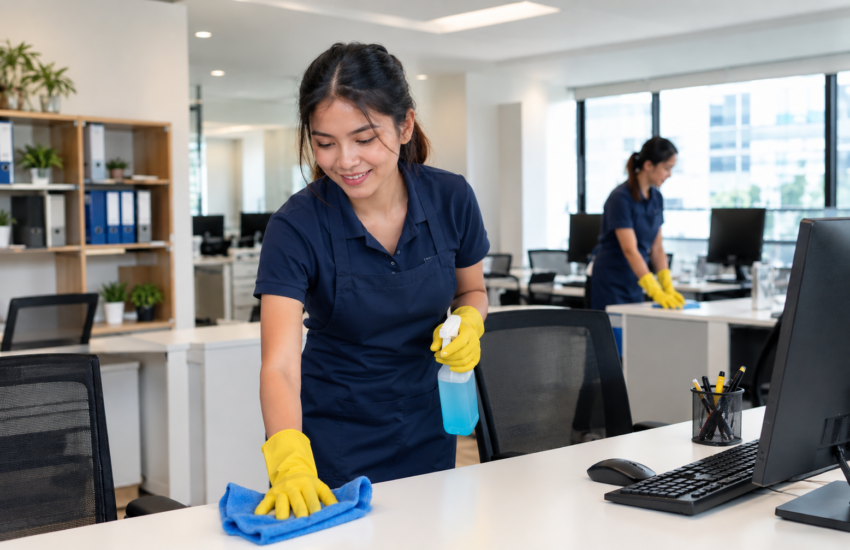
Desks are among the most frequently used areas in an office. Employees may spend hours working at the same workstation, touching keyboards, mice, phones, desk edges, and drawer handles.
Dust and crumbs can collect around equipment, while shared workstations may require more frequent cleaning.
How to maintain cleaner workspaces
Start with open desk surfaces and other areas that can be safely accessed. Dust shelves, clean suitable surfaces, and remove visible debris. Empty desk-side trash cans and vacuum the floor around workstations.
Pay attention to frequently touched items such as:
- Desk edges and drawer handles.
- Shared telephones.
- Keyboard and mouse surfaces.
- Office chair arms.
- Shared stationery and equipment.
Employees should keep personal belongings organized so cleaners can reach the surfaces that need attention.
Before cleaning a workstation, respect personal items and confidential documents. Avoid moving paperwork or unplugging equipment without permission. Electronics require appropriate cleaning products and methods.
In offices with shared desks or hot-desking arrangements, cleaning between users may be especially useful.
6. Floors, Carpets, and Entrance Mats
Office floors collect dirt from shoes, dust from the air, spilled drinks, and debris from daily activities. Even when desks and counters look clean, dirty floors can make an entire office appear neglected.
Different floor types require different cleaning methods, so the cleaning plan should match the surface.
Carpeted floors
Vacuum carpets regularly, focusing on walkways, entrances, and areas under desks. Spills should be addressed promptly using a method suitable for the carpet. Periodic deep cleaning may help remove built-up dirt that regular vacuuming cannot reach.
Hard floors
Sweep or vacuum first to remove loose dirt. Then mop with a compatible cleaning solution. Using too much water or an unsuitable product may damage some flooring materials.
Entrance mats and high-traffic areas
Clean mats often because they collect dirt before it spreads throughout the office. Inspect corners and areas around furniture, where dust and debris can gather unnoticed.
Offices with heavy foot traffic may need daily floor care, while quieter spaces may follow a less frequent schedule.
7. High-Touch Surfaces and Shared Equipment
Some surfaces receive repeated contact from many people throughout the workday. These include door handles, elevator buttons, light switches, shared phones, printer controls, and break room appliance handles.
Because many people touch these surfaces, they deserve special attention in the cleaning schedule.
Common high-touch surfaces to include
- Door handles and push plates.
- Light switches.
- Elevator buttons and handrails.
- Shared keyboards, mice, and phones.
- Printer and copier controls.
- Faucet handles and cabinet pulls.
- Shared tables and chair arms.
Cleaning removes dirt, while disinfecting uses an appropriate product to reduce germs on a surface. When disinfection is needed, follow the product label, including the required wet contact time. Clean visibly dirty surfaces before disinfecting them.
The right frequency depends on how often a surface is touched, the number of people using the space, and the needs of the workplace.
How Often Should Common Office Areas Be Cleaned?
Not every area needs the same cleaning schedule. The best plan depends on office size, employee numbers, visitor traffic, and the type of work performed.
Here is a simple starting point:
| Office area | Suggested frequency |
| Reception and entrance | Daily |
| Kitchen and break room | Daily, with extra checks after spills |
| Restrooms | Daily, with checks based on usage |
| Meeting rooms | After heavy use and as part of daily cleaning |
| Desks and workstations | Regularly, with shared areas cleaned more often |
| Floors and entrance mats | Daily in busy areas; adjust for traffic |
| High-touch surfaces | Daily and more often when needed |
This schedule is a general guide, not a fixed rule. A busy office may need more frequent cleaning, while a small office with limited visitors may need less.
How to Create an Effective Office Cleaning Plan
A written cleaning plan makes it easier to keep track of tasks and maintain consistent standards.
Start by listing every shared area in the office. Identify which tasks should happen daily, weekly, and periodically. Assign responsibilities to employees or cleaning staff, and provide a checklist to help prevent missed tasks.
Choose cleaning products based on the surfaces being cleaned and follow the manufacturer’s instructions. Make sure cleaners know how to handle chemicals safely and how to clean electronic equipment without damaging it.
It is also useful to review the plan as the workplace changes. A growing team, a new office layout, or an increase in visitors may mean certain areas need more attention.
Working with a professional office cleaning company can help businesses maintain a regular routine without relying entirely on employees to handle cleaning tasks.
Keep Your Workplace Clean and Welcoming
A well-maintained office starts with a clear plan for the areas people use every day. By giving reception areas, kitchens, restrooms, meeting rooms, workstations, floors, and high-touch surfaces the attention they need, businesses can create a cleaner and more welcoming environment.
If your business needs help maintaining its workplace, Elena Cleaning Services LLC offers residential and commercial cleaning solutions, including office cleaning. Visit the Elena Cleaning Services website to learn more about its services or request a free quote.
Frequently Asked Questions
What areas of an office need cleaning every day?
Reception areas, restrooms, break rooms, entrance floors, and frequently touched surfaces often need daily attention. Desks, meeting rooms, and other workspaces should also be cleaned regularly based on use and workplace needs.
How often should office restrooms be cleaned?
Restrooms should generally be cleaned daily, with additional checks based on how many people use them. Busy workplaces may need several checks throughout the day to maintain cleanliness and restock supplies.
What are the most important high-touch surfaces in an office?
Common examples include door handles, light switches, elevator buttons, shared phones, keyboards, printer controls, and kitchen appliance handles. Cleaning frequency should reflect how often people touch these surfaces.
Can employees handle office cleaning themselves?
Employees can help by tidying desks, cleaning up food spills, and keeping shared spaces organized. However, scheduled cleaning is still important for tasks such as restroom cleaning, floor care, and maintaining common areas.
What should businesses look for in an office cleaning company?
Look for a provider that understands your workplace needs, explains its cleaning tasks clearly, offers suitable scheduling, and communicates well. Ask about the scope of service, cleaning products, and how quality is checked before making a decision.

[…] about common areas that need regular office cleaning can also help you build a checklist before you request […]